What on earth is DeepSeek harness?



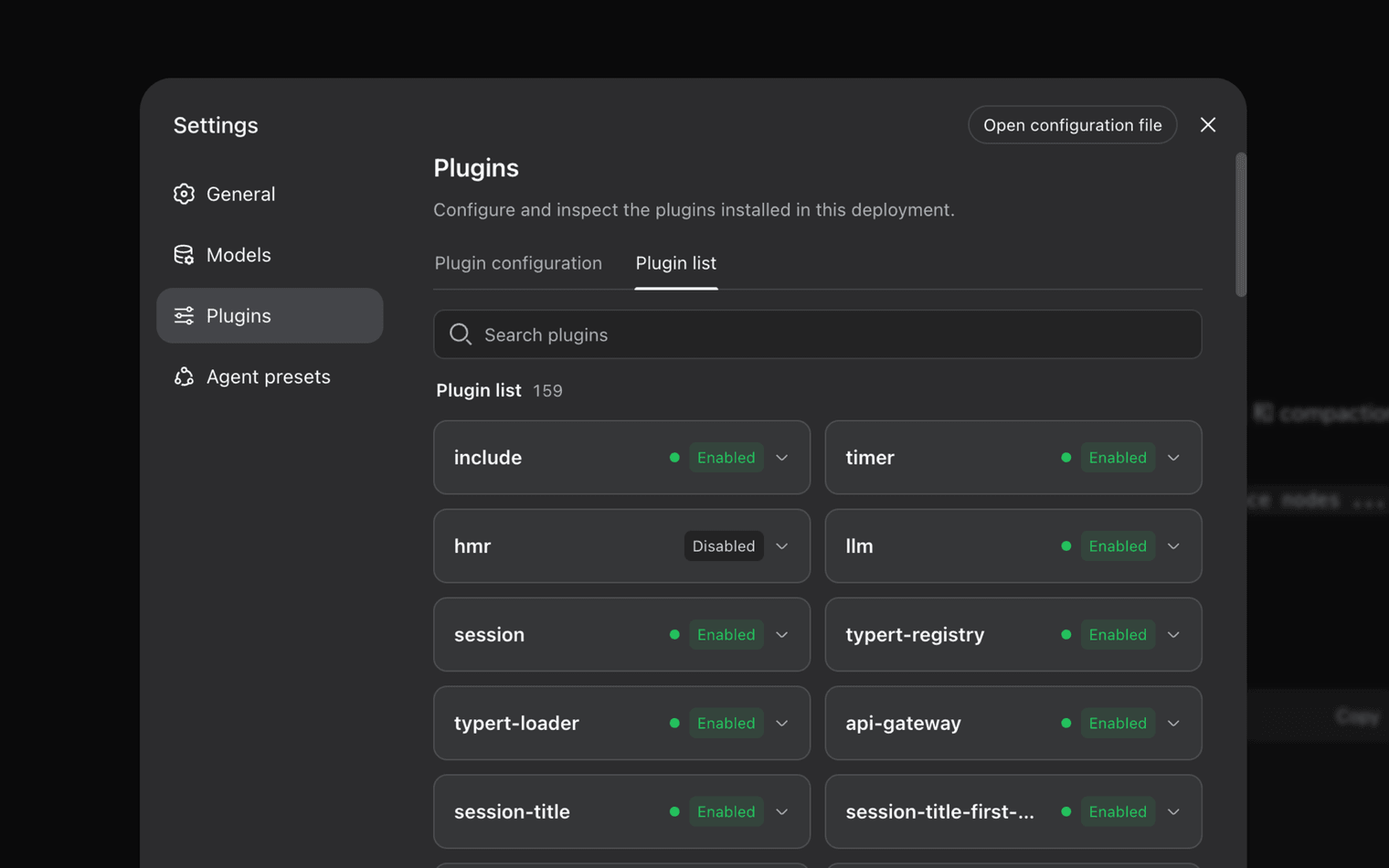
If you follow AI news, you've probably heard a lot about "models" like GPT, Claude, Gemini, and DeepSeek. But recently a new word has been quietly stealing the spotlight: the harness. In August 2026, DeepSeek released something called DeepSeek Harness (or "dsh" for short), and it lit up developer forums almost overnight. So what is it? Why does it matter? And how does it stack up against similar tools? Let's break it down in plain language.
First, the analogy: the model is the brain, the harness is the body
Imagine you hire a brilliant new employee. They're razor-sharp, they can reason through hard problems, and they write beautifully. But on day one you sit them in an empty room with no computer, no files, no email, and no way to talk to anyone. That genius is basically useless, not because they lack talent, but because they have no way to interact with the world.
An AI model is that brilliant employee. The harness is everything else: the desk, the computer, the file cabinet, the phone, the notepad they use to track their to-do list, and the office rules about what they're allowed to touch. DeepSeek puts it as a simple equation, where an agent equals a model plus a harness. The model is the soul. The harness is what lets that soul actually get work done in a real environment.
More concretely, a coding harness is the software wrapper that lets an AI model read your files, edit them, run terminal commands, search the web, remember what it did five steps ago, and break a big job into smaller pieces. Tools like Anthropic's Claude Code and OpenAI's Codex are famous examples. DeepSeek Harness is DeepSeek's open-source entry into that same category.
The big idea: "everything is a plugin"
Most coding assistants are built like a sealed appliance, a toaster. It does one thing, the way the manufacturer decided, and you can't really open it up. DeepSeek Harness takes the opposite approach. It's built more like a set of LEGO bricks, or a gaming PC where every component is a slot you can pop out and replace.
Its guiding principle is literally "everything is a plugin." Almost every part of the system is a swappable module: the AI model itself, the tools it can use, its memory, its sandbox, the way it loops through tasks, even the user interface. Don't like the model? Swap it. Want a different way to store files? Swap that too. And crucially, you do all this through configuration, without rewriting the core software. Under the hood, this is powered by a framework DeepSeek calls Cordis, which acts like the motherboard that lets all these plug-in components talk to each other.
There's a second principle worth knowing: every run is traceable. The harness keeps an append-only log of everything the model saw and did, including the instructions, its reasoning, every tool it called, and the results. Think of it like an airplane's black box recorder. You can rewind, fork, search, and replay any session. For developers trying to figure out why an agent did something weird, this is enormously useful.
Four ways to run it
DeepSeek Harness ships with several "modes," which you can think of as different gears for different kinds of driving. Standard mode is the full-featured coding agent, with file editing, a shell, file and web search, planning, sub-agents, and workflows. Code mode is a clever twist: the model writes actual code to orchestrate several tool calls at once, rather than firing them one at a time. Minimal mode strips things down to just a shell and a file editor, which is handy for cleanly measuring how good a model really is without a fancy harness helping it. And Creator mode is the workshop where developers tinker with plugins and assemble their own custom setups.
Getting started is deliberately low-friction. If you have Node.js installed, one command launches a local web interface on your own machine: npx @deepseek-ai/dsh web. It's open source under the permissive MIT license, and it caught fire immediately, racking up tens of thousands of GitHub stars within hours of launch.
Why does this matter?
For a long time, AI companies competed mostly on the model: who has the smartest brain, at the cheapest price. DeepSeek releasing its own harness signals a shift. The battle is moving up a layer, to the software that surrounds the model. As one industry analysis put it, models are increasingly easy to swap behind standard interfaces, but the harness that controls how an agent reasons, uses tools, and remembers things across a long task is much harder to replace. Whoever owns that layer owns a sticky, valuable piece of the puzzle.
It's worth keeping expectations grounded, though. DeepSeek Harness launched as a developer preview, and the team openly warns there will be compatibility-breaking changes. It's not yet a polished, drop-in production tool the way some commercial rivals are. Think early-access beta, not finished product.
How it compares to other harnesses
DeepSeek Harness isn't alone. A whole family of "agent harnesses" has emerged, each with a slightly different personality. Here's how a few of the notable ones compare.
Deep Agents (by LangChain / LangGraph)
LangChain's Deep Agents is an open-source harness built on top of their LangGraph engine, and it's aimed squarely at long-running, complex tasks like deep research and multi-step coding. It comes "batteries included" with the things such tasks need: planning tools to break down objectives, sub-agents to work on pieces in parallel, a virtual filesystem for long-term memory, and smart context management to stop the AI from drowning in its own history. It's model-neutral (use any provider) and plugs neatly into LangChain's broader ecosystem, including their LangSmith debugging platform. If you picture DeepSeek Harness as a bare motherboard you build on, Deep Agents feels more like a pre-assembled developer kit that slots into an existing toolchain.
Goose (by Block)
Goose is an open-source, general-purpose AI agent that runs on your own machine, and notably, it's not just for code. People use it for research, writing, automation, and data analysis too. It comes as a native desktop app, a command-line tool, and an API, and it's built in Rust for speed. Its superpower is extensibility through the Model Context Protocol (MCP), an open standard that lets it connect to 70-plus extensions like databases, browsers, GitHub, and Google Drive. It works with 15-plus model providers and can even use your existing Claude or ChatGPT subscription. Goose also leans hard into safety, with prompt-injection detection, permission controls, and a sandbox mode. If DeepSeek Harness is the ultra-modular kit for harness builders, Goose is the friendly, ready-to-use Swiss Army knife for everyday users.
Claude Code and OpenAI Codex
These two are the established commercial heavyweights, and they're the tools DeepSeek Harness is most often compared against. They can do the same core things: read, edit, and test a repository, run shell commands, plan, and delegate to sub-agents. But they go well beyond a bare agent loop, with mature, built-in permission and sandboxing systems, and they meet you wherever you work: terminals, VS Code and JetBrains plug-ins, desktop apps, the browser, even Slack and mobile. They also offer hosted "background agents" and deep GitHub integration, things like automatic code reviews and turning an issue into a pull request. The trade-offs: they're primarily tied to their maker's own models (Claude and OpenAI respectively), and they're commercial products rather than a fully open, swap-anything kit. Codex's command-line tool is open source, but its cloud services are managed.
The quick cheat sheet
If you just want the gist, here's the one-line version of each:
- DeepSeek Harness: the maximally modular "everything is a plugin" kit. Any model, fully open (MIT), but still an early developer preview.
- Deep Agents (LangChain): a batteries-included harness for long-running research and coding. Any model, open source, and tightly integrated with the LangChain ecosystem.
- Goose (Block): a friendly general-purpose desktop agent for far more than code. Any of 15-plus models, open source, with strong MCP extensibility and built-in safety.
- Claude Code and Codex: the polished, mature commercial tools that live in your editor and GitHub. Mostly tied to their own models, and the most production-ready of the bunch.
The bottom line
Strip away the jargon and DeepSeek Harness is simple to understand. It's the "body" that lets an AI "brain" actually roll up its sleeves and do real work: reading files, running commands, remembering its progress, and staying within the rules you set. What makes DeepSeek's version stand out is its radical openness. By making literally every part swappable and giving it away under a permissive license, DeepSeek is betting that developers want to build their own agents, not rent someone else's sealed appliance.
Whether it ends up beating polished rivals like Claude Code or complementing flexible peers like Deep Agents and Goose, one thing is clear: the interesting AI competition is no longer only about who has the smartest model. It's increasingly about who builds the best harness to put that intelligence to work. And for the first time, a top model lab has handed that toolkit to everyone.